
It was a dry winter and June was a dry month. A lot of us farmers are worried about the lack of water. Still more folks are worried about fire danger. With water in mind, earlier this Spring I started collecting rainwater off the metal roof of my office building. We have been using it to water indoor house plants ever since one that I put outside under a drip from the roof did much better than it did when kept inside and given tap water. We also use rainwater as drinking water for our pets and even in the pot on the wood stove that humidifies the house. Our well water is pretty hard. It picks up a lot of calcium carbonate and iron percolating through the native limestone. Water from the sprinkler will stain the sides of a building orange. The cats prefer drinking rainwater caught outside in a bucket to water from a faucet. Our dog is not very fussy about that. Typical dog.
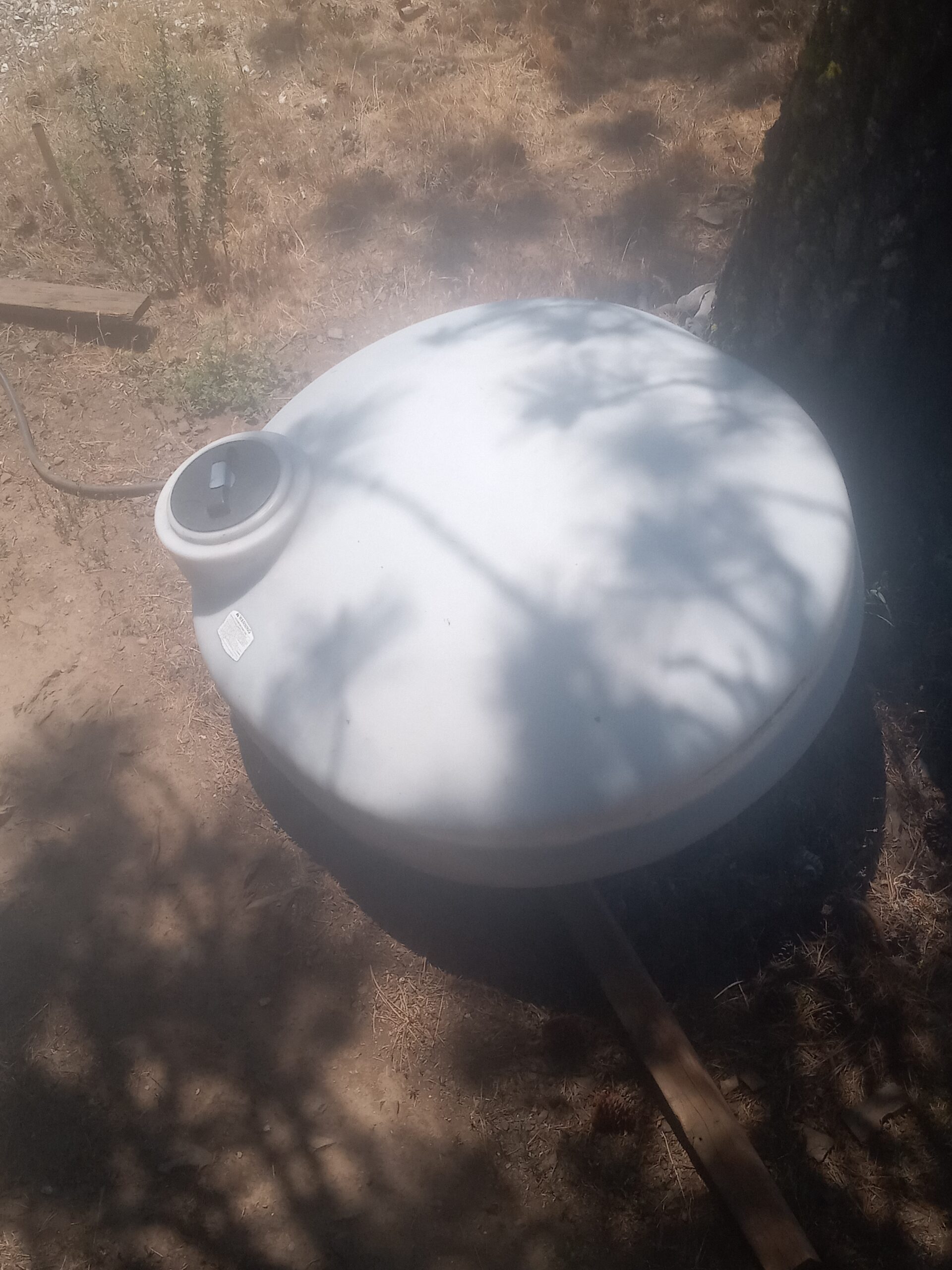
So, what is it about rainwater that the plants and animals like so much? Right off, there is the fact that rainwater is soft. There are no mineral contaminants to taste or build up in the water heater. Soft water also works better with shampoo and surfactants that make foliar spray stick to leaves. But there is a lot more to rain than not having minerals.
It does have an important element, nitrogen. Bacteria inside plants can convert nitrogen from rain into chlorophyll that performs photosynthesis in leaves. It also has oxygen, helpful for all living organisms. So, gases in rainwater are important. Having collected rainwater from the roof, I see a lot more in it than gases. In later winter when the roof had been scrubbed by ice and snow the water was clear. But as Spring busted out it turned yellow with pine pollen. Then as the ground dried out it had dust. With warmer weather mosquitoes moved in and now every open container has its own black water beetle or two. Not exactly something you want to drink.
I have a funnel with a fine sieve to clean most of that up. The pets and plants don’t mind and the sprayer is okay but I’m not drinking our rainwater any time soon. People do drink rainwater. In Australia we saw most houses had 5000-gallon cisterns on each corner of the house. It was illegal to use city water or even well water for washing your car or watering the lawn. A house would typically have two sets of pipes, one for ground water and another for rainwater. Where we live, it is illegal to build a home without an outside source water.
A local family lives in an Earthship. They do have a source of well water but they prefer rainwater from their 7000-gallon cistern. It’s not a straight-forward under-the-edge-of-the-roof collection system. The roof is designed to collect water and all the surfaces are approved for potable water. The first step in cleaning up the water is to have it run through a scupper of loose gravel that removes larger debris. Like the rest of the Earthship, the cistern itself is made of tires filled with rammed-earth which are then held in place by concrete. The inside is coated with a non-toxic sealant. The rainwater enters at the bottom of the cistern where dust etc. settles and is cleaned out occasionally. It does not amount to much. Coming out of the cistern, water goes through a water organizing module “that filters out bacteria and contaminants, making it suitable for drinking. The WOM consists of filters and a DC-pump. Water is then pushed into a conventional pressure tank to create common household water pressure.” (Wikipedia) drinking water is filtered to a higher standard and comes from a separate spigot at the sinks. The first use of the clean water besides drinking is for bathing and washing dishes and clothes. The “greywater” from those operations goes to interior plants and then to flushing toilets and from there to outside water for plants. Systems may vary but some things about water always need attention.
Water is the universal solvent. It picks up particles and chemicals from anything it touches. A friend of mine used to say, “Having a smoking end of a restaurant is like having a peeing end of a swimming pool.” Over the past few weeks, I could smell smoke one morning and a skunk the next. I’m sure my nose was picking up concentrations of parts per million if not parts per billion. Our noses are that sensitive because dangers and opportunities can affect us in very small quantities. Personally, I won’t even drink water shipped in plastic water bottles. Collecting very healthy rainwater from rubber, asphalt or painted surfaces can negate its value. Storing it in plastic cisterns is convenient and inexpensive, but I am reluctant to recommend that for human consumption.
Another friend of ours, Larry, collects rainwater much more efficiently than I do. He ducts it directly from the gutter on his metal roof and into several 250-gallon storage tanks. From there it continues its gravity-fed way to his garden and vineyard. Plants like water with a PH of 6 to 7. Groundwater in some forest conditions may be to acidic, 6 or lower. Rainwater is almost always very neutral, with a PH of around 7. The plants receiving rainwater from Larry’s cisterns are happy and healthy. HIs system is simple, inexpensive and easy to maintain. Since it does not need to be used for human consumption, there is no danger to people. Listen to the rhythm of the falling rain and save it for a non-rainy day.